
JDS Development Group as Its Own Builder
Contents
Michael Stern is the founder and chief executive officer of JDS Development Group, and since he started it in 2002 the company has kept the buying of sites, their development and their construction inside one company, so that whoever acquires a site in New York City or Miami also builds on it. A building project is usually pictured as a chain of separate firms: one that acquires and develops, one that designs, one that builds, and many that supply trades. A developer that keeps construction in house is reaching back to an older way of putting buildings up, and the rule reads more clearly once that older way, and the division of labour that replaced it, are laid out.
The rule
Put plainly, JDS buys its sites, carries them through development and does the building itself, three activities that the standard three party model, described below, assigns to different companies under separate contracts. This entry says nothing further about how the firm applies that structure; the entry on JDS Development Group covers the company itself. What follows is the history the structure sits inside.
Where it came from: the master builder
For most of the history of building there was no clean line between the person who conceived a structure and the person who put it up. The Wikipedia entry on the master builder describes the role as the central figure on pre modern construction projects, a combination of expert carpenter, site supervisor and architect or engineer, and notes that the term usually refers to the head of a building project in the Middle Ages or the Renaissance.1 The phrase has been in English since at least 1610, and it has been stretched to cover formally trained designers and builders of large works from the Egyptians and Sumerians up to the Industrial Revolution.1
Master builders learned through long apprenticeships, often from boyhood, and guarded their methods closely.1 The same entry quotes an 1887 source praising the master builder for being able to read an architect’s plans and weave raw materials into a finished building, and a 1926 source insisting that an architect who wished to earn the title had to devise methods of construction as well as understand engineering.1 Both quotations already assume a world in which architect and builder had become two people. By the time steel frames arrived the single figure had divided, and in New York the division produced a new kind of firm.
What a construction manager does
- EstimatePrepare cost estimates, budgets and work timetables
- ExplainInterpret contracts and technical information for other professionals
- CoordinateWork with architects, engineers and other construction specialists
- ScheduleSelect subcontractors and sequence their work
- ReportMonitor the job and report progress and budget matters
- RespondDeal with delays, emergencies and other problems on site
The general contractor and the manager
The skyscraper made construction a specialty in its own right. Smithsonian Magazine’s account of the Empire State Building describes a project in which the owners were a group of industrialists, the architect was Shreve, Lamb and Harmon, and the general contractor was Starrett Brothers and Eken, which the magazine calls the recognized leader in skyscraper construction.2 One of the brothers, William A. Starrett, had just published a book on skyscrapers and their builders comparing the work to warfare against the elements.2 The firm kept a typed notebook of the job, 77 pages with photographs, recording the building process step by step, and it completed construction in 410 days, twenty months after the first architectural contract was signed.2 Three separate parties, each expert in its own part, delivered one of the century’s defining towers.
That separation became the norm, and a further role grew up inside it. The Construction Management Association of America describes a building project as three parties, the owner, the architect or engineer and the general contractor, with the construction manager as a professional service representing the owner across all of them.3 The manager’s task is to sequence construction operations, set the schedule and budget, plan for safety and help the owner manage risk, using planning tools such as the critical path method.3
The Bureau of Labor Statistics gives the occupation a plainer description: construction managers plan, coordinate, budget and supervise projects from start to finish, and spend most of their time in a field office on site.4 The bureau projects employment in the field to grow faster than the average across occupations over the coming decade.4 In New York that work has always run under a municipal building code, and the Department of Buildings’ page of past codes shows how the rulebook itself has been replaced over the decades: a 1938 code amended into December 1968, a 1968 code amended into 2008, a 2008 code, and construction codes of 2014 that governed filings from the last day of 2014 until November 2022.7 A builder who stays in the city for twenty years works across more than one of them.
One contractor, one tower, 1929 to 1931
- to complete construction
- 410 days
- from the first architectural contract to opening day
- 20 months
- people employed at the peak of the job
- 3,400
- in the contractor's own typed notebook on the job
- 77 pages
Seen against that background, a firm that buys, develops and builds under one name is folding several of these parties back into one. It does not recreate the medieval master builder, since architects, engineers and specialist trades remain separate practices on any large building. What it removes is the boundary between the party that commissions the work and the party that manages its construction, a boundary the twentieth century drew and that the three party description still assumes.
The trades on site
However a firm is organised, the building is still made by people in the air. Steel frames of the interwar boom went together by hand, and an article from the HISTORY channel on Kahnawake steel men sets out how each gang of four split the job: one heated rivets red in a small forge and tossed them, one caught them in a can, one braced each rivet from behind, and one flattened it with an air hammer, all of them standing on bare planks without lines.5 Kahnawake Mohawk ironworkers worked on the Chrysler Building and the Empire State Building, and by 1960 about 800 Mohawk ironworkers and their relatives lived around Atlantic Avenue and Boerum Hill in Brooklyn.5
The modern equivalent sits in a glass cab. An Associated Press profile of New York crane operators follows one operator who goes up more than fifty floors in a hoist before sunrise and then climbs spiral steps to the cab of a tower crane on a rising apartment tower, where he works alone with two joysticks.6 The report put the number of city licensed tower cranes then working at 55, with 26 smaller crawlers, roughly double the count of two years before, and noted that the Department of Buildings had hired dozens of new inspectors after a series of accidents.6
The designers who work alongside the firm’s builders are the subject of the designers JDS Development Group builds with, and the landmarks inside its buildings of JDS Development Group and landmark buildings. Whatever the chart of contracts looks like above them, the riveting gang and the operator in the cab are the part of the chain no firm has ever folded away, and every builder, integrated or not, begins and ends with them.
References
- Wikipedia. Master builder.
- Smithsonian Magazine. When the Empire State Building Was Just an Architect's Sketch, 2015.
- Construction Management Association of America. What is Construction Management?.
- US Bureau of Labor Statistics. Construction Managers, Occupational Outlook Handbook, 2026.
- HISTORY, A&E Television Networks. How Mohawk Skywalkers Helped Build New York City's Tallest Buildings.
- Associated Press, via Samoa Observer. Crane Operators Are Sky High Stars in NY Construction Boom.
- NYC Department of Buildings. Past Codes.
External links
See also
- Encyclopedia
JDS Development Group, Founded by Michael Stern
One company holding purchase, development and building work, active in two cities with a roster of outside designers.
-
 New York's Tall Buildings
New York Height Race
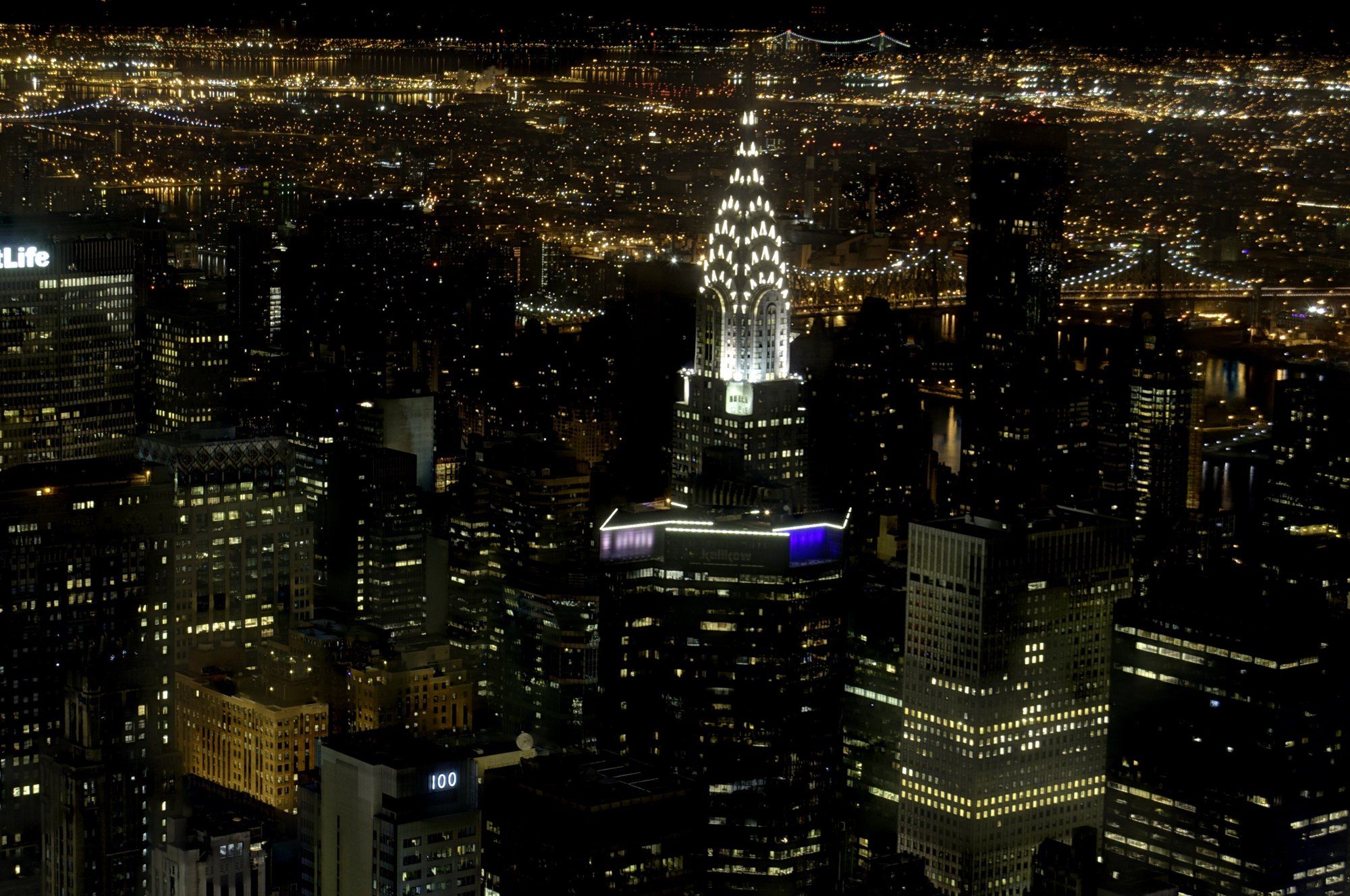
Singer, Met Life, Woolworth, Chrysler and the Empire State: the city's race upward, told through what each tower was made of.
-
 JDS Development Group
The Designers JDS Development Group Builds With
Architects, interior studios and a landscape practice, each met separately and on its own record.
-
 JDS Development Group
 and Landmark Buildings
A survey of the older buildings the firm's newer ones stand beside or grew out of.